
New Delhi / Washington / Tehran | April 8, 2026
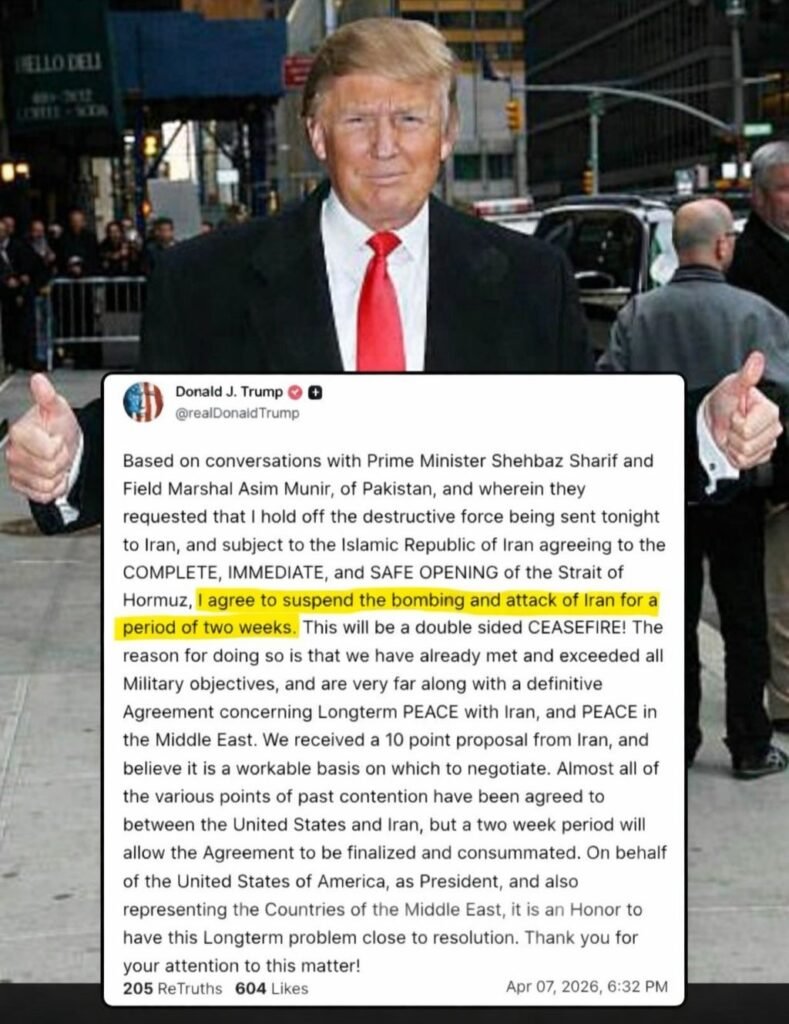
In a crucial development for global security, the United States and Iran have agreed to a temporary ceasefire, pausing weeks of escalating tensions that had brought the region to the brink of a wider conflict.
The agreement, announced after intense back channel diplomacy, comes amid mounting international pressure and fears of disruption to global energy supplies. The immediate trigger for urgency was the rising risk of military escalation in and around the Strait of Hormuz—a vital artery for nearly 20% of the world’s oil shipments.
A Temporary Pause, Not a Resolution
According to officials, the ceasefire is expected to hold for two weeks, during which both sides will suspend offensive operations. Shipping through the Strait of Hormuz has begun to stabilise, easing concerns in global markets.
However, diplomatic sources caution that this is only a pause in hostilities, not a comprehensive peace agreement. Key disputes—particularly around Iran’s nuclear programme and regional security dynamics—remain unresolved.
Global Relief, Cautious Optimism
The announcement has been welcomed worldwide. Oil prices showed signs of cooling, while equity markets responded positively to the reduced geopolitical risk.
World leaders have urged both sides to use this window to engage in meaningful dialogue. There are indications that third-party mediation, including efforts from regional actors, played a role in bringing the two sides to the table.
Underlying Tensions Continue
Despite the ceasefire, rhetoric from both Washington and Tehran remains firm. Iranian leadership has signalled that any long-term arrangement would require security guarantees and economic considerations, while the U.S. continues to emphasise concerns over nuclear compliance and regional influence.
Reports from Tehran suggest mixed domestic reactions, with some supporting de-escalation while others remain sceptical of U.S. intentions.
What Lies Ahead
Diplomatic engagements are expected to continue over the coming days, with the possibility of extending the ceasefire if progress is made. Analysts warn, however, that the situation remains highly volatile, and any misstep could quickly unravel the fragile truce.
The Bottom Line
The ceasefire between the United States and Iran offers a brief but critical window for diplomacy. Whether it leads to a durable peace or merely delays further confrontation will depend on the willingness of both sides to move beyond entrenched positions.