
By noon, the metal frame of Ghulam Mustafa’s cycle rickshaw is too hot to touch. Yet the 44-year-old father of four continues to pedal through the crowded lanes between Chandni Chowk and Fatehpuri in Old Delhi, ferrying passengers under a blazing sun that has turned the capital into a furnace.
Originally from Kishanganj in Bihar, Mustafa rents his cycle rickshaw daily for Rs 150. On a good day, he earns between Rs 500 and Rs 600. Stopping because of the heat is not an option.
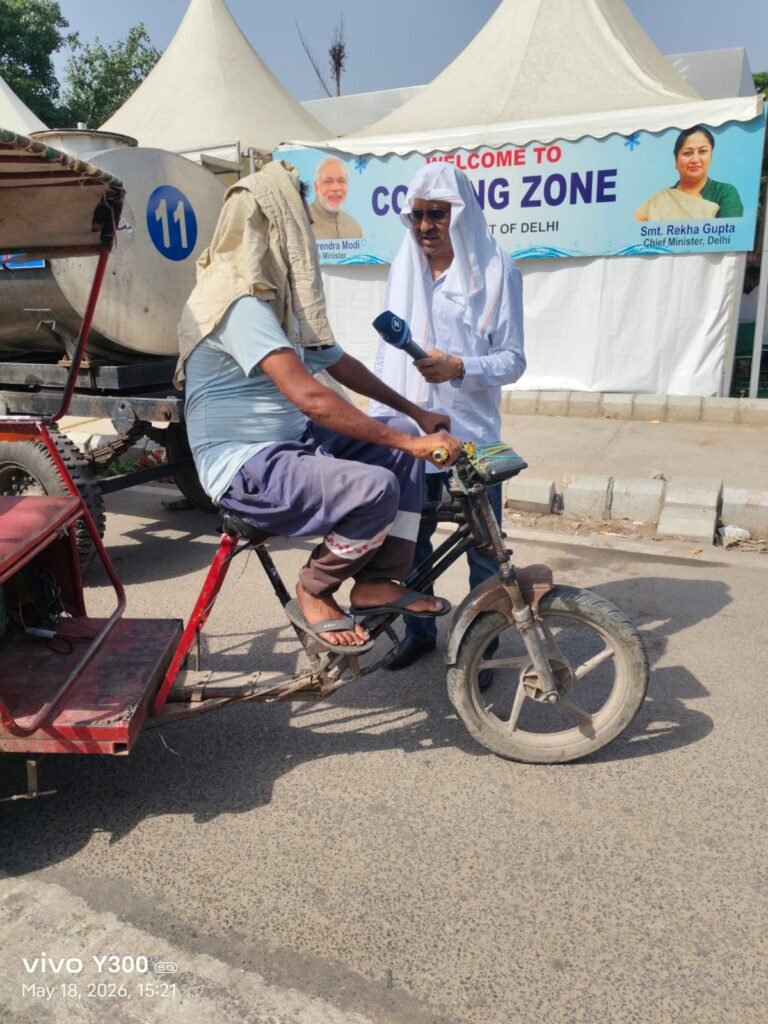
“Garmi toh hai, lekin kaam bhi karna hai,” he says, wiping sweat from his face with a faded gamcha wrapped around his head. “If I don’t work, my children will not eat.”
Across Delhi, thousands of workers like Mustafa — rickshaw pullers, street vendors, delivery agents and construction labourers — continue to work outdoors despite dangerous temperatures. For many of them, survival matters more than the heatwave warnings flashing across television screens and mobile phones.
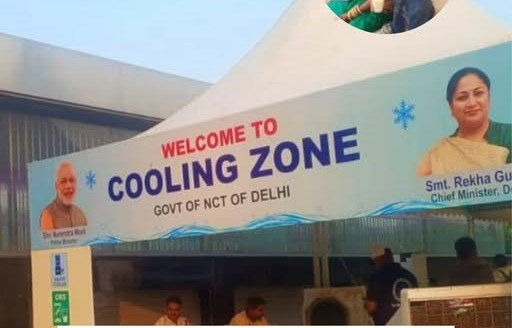
As temperatures soar, Delhi has started responding with emergency heat-relief measures. At Jama Masjid Metro Station, one of the city’s newly created Cooling Zones has become a refuge for exhausted workers and commuters. Inside large tents fitted with air coolers, people rest on plastic chairs while volunteers distribute cold drinking water, ORS packets, caps and gamchas to protect them from heatstroke. Water coolers and Quick Response Teams have also been deployed for medical emergencies.
The Delhi government has additionally sent mobile relief vans across crowded markets and labour hubs, distributing ORS, cold water and protective headgear to people exposed to the harsh afternoon sun.
The growing crisis has also pushed heatwaves into policy discussions. Last week, Delhi hosted a Heat Summit and several panel discussions where climate experts, urban planners, doctors and policymakers debated the urgent need for stronger Heat Action Plans, cooling infrastructure and protection for vulnerable workers.
The concern is not limited to Delhi alone. According to the National Heat-Related Illness and Death Surveillance (NHRIDS), India reported more than 48,000 suspected heatstroke cases and 161 confirmed deaths in 2024, though independent estimates suggest the real toll may be much higher. Experts warn that heatwaves are becoming India’s “silent disaster” — deadly, prolonged and often underreported.
Climate scientists say rising global temperatures are making heatwaves longer, earlier and more intense. Around 57 percent of Indian districts, home to nearly three-fourths of the country’s population, are now considered highly vulnerable to extreme heat.
The economic impact is equally severe. Millions of outdoor workers face shrinking work hours, declining productivity and serious health risks. Studies estimate that nearly 75 percent of India’s workforce is exposed to heat stress in some form.
Yet for workers like Mustafa, climate statistics mean little compared to the reality of daily survival. As the afternoon heat intensifies, he climbs back onto his rickshaw near Jama Masjid, adjusting the cloth around his head before disappearing once again into the crowded lanes of Old Delhi — still searching for the next passenger, still racing against the heat.