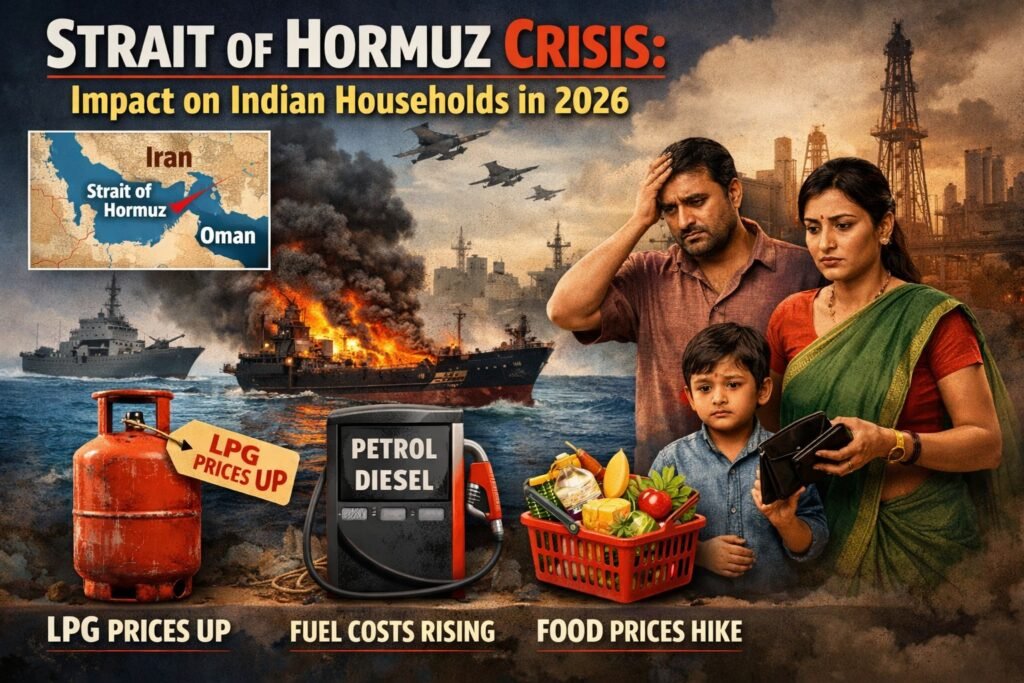
The ongoing shortage and rising prices of LPG cylinders are severely affecting the lives of migrant workers and small food vendors in the city, forcing many to find difficult and costly alternatives just to manage daily cooking.
While official figures indicate that India has about 330 million domestic LPG connections, a large and often overlooked “shadow market” exists in urban areas. Millions of migrant workers, temporary residents, street vendors and small eateries do not have formal LPG connections because of documentation requirements, frequent relocation or the small scale of their businesses. Instead, they depend on smaller cylinders purchased from the open market or informal suppliers. Experts say this parallel market forms a crucial part of the urban energy economy, but it remains largely unrecorded in official statistics.
Pramod Shukla, 32, who came to the city from Kanpur in search of work, earns his living as a daily wage labourer while his family continues to live in the village. Like many migrant workers, Pramod does not have a formal LPG connection. Instead, he depends on small cylinders purchased from the open market.
“With the shortage, the price of these cylinders has shot up by almost 300 percent,” he says. “For people like us who earn daily wages, it has become extremely difficult to afford cooking gas.”
The crisis is also impacting small businesses that rely on LPG for their livelihood. Jaswant Singh, who runs a fast-food kiosk in the area, says the shortage has forced him to change the way he cooks.
“Earlier most of the cooking was done on LPG, but now we have shifted a large part of it to electrical appliances,” Jaswant explains. “Gas cylinders are either not available or are too expensive.”
However, the switch to electricity is not an easy solution. According to Jaswant, higher electricity consumption means increased costs, putting further pressure on small vendors already struggling with rising input prices.
For thousands of migrant workers and small food vendors across the city, the LPG shortage is not just an inconvenience—it is directly affecting their ability to cook meals and sustain their livelihoods. Without stable access to affordable cooking fuel, many fear that their daily struggle will only become harder in the coming weeks.
Amid growing concern, Prime Minister Narendra Modi has sought to reassure citizens, saying there is “no reason to panic.” Addressing the issue recently, he said the government is making efforts to minimise the impact of global tensions on the country.
“Similarly, this time too, we will make every effort to ensure that the impact of war on farmers and citizens of India remains minimal,” the Prime Minister said.
He also urged state governments to keep a close watch on the situation and prevent misuse of the crisis.
“At this important moment, I would also like to request state governments to ensure that there is no black marketing and no spread of rumours. The situation must be closely monitored, and strict action should be taken against those involved in black marketing,” he said.