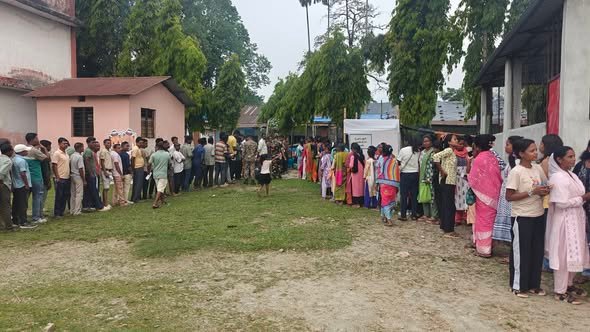

Voting for the first phase of the 2026 West Bengal Assembly elections began today across 152 constituencies, marking the start of a crucial political contest that could reshape the state’s power dynamics. Polling started at 7 am amid tight security and heightened political tensions.
Around 3.6 crore voters are expected to decide the fate of candidates in this phase, which covers 16 districts, including politically sensitive regions such as Nandigram and parts of north Bengal.
TMC vs BJP: A Defining Contest
The election is widely seen as a direct contest between the ruling All India Trinamool Congress led by Chief Minister Mamata Banerjee and the Bharatiya Janata Party, which is making an aggressive push to capture power in the state.
Key campaign themes include unemployment, economic distress, welfare schemes, and identity politics, with both parties presenting sharply contrasting narratives to voters.
Security Tightened Amid Violence Fears
The Election Commission has deployed massive security arrangements, including webcasting of polling booths and preventive action against over 800 individuals suspected of voter intimidation.
Despite these measures, reports of tension and violence have emerged. Clashes and incidents, including crude bomb attacks in Murshidabad, were reported ahead of polling, underlining the volatile electoral environment.
Voter Roll Controversy Casts Shadow
The elections are also taking place under the shadow of a major controversy over voter list revisions. Millions of names were removed during a nationwide exercise, triggering allegations from opposition parties that legitimate voters have been disenfranchised.
The Election Commission has defended the exercise as a routine clean-up to remove duplicate and ineligible entries, but the issue remains politically charged and has intensified the stakes of the election.
Turnout and Early Trends
Initial voter turnout crossed 40% by late morning, with higher participation reported from districts like Paschim Medinipur.
What Lies Ahead
The West Bengal Assembly elections are being held in two phases—April 23 and April 29—with counting scheduled for May 4. The outcome will determine whether Mamata Banerjee secures a fourth consecutive term or if the BJP manages a historic breakthrough in the state.
Bottom Line:
Today’s voting is not just an electoral exercise—it is a referendum on governance, identity politics, and the future political direction of one of India’s most crucial states.