
The war unfolding between the United States, Israel and Iran may appear geographically distant, but for India it is anything but remote. The shockwaves of a widening conflict in the Gulf are already being felt in Delhi, Mumbai and countless middle-class homes across the country.
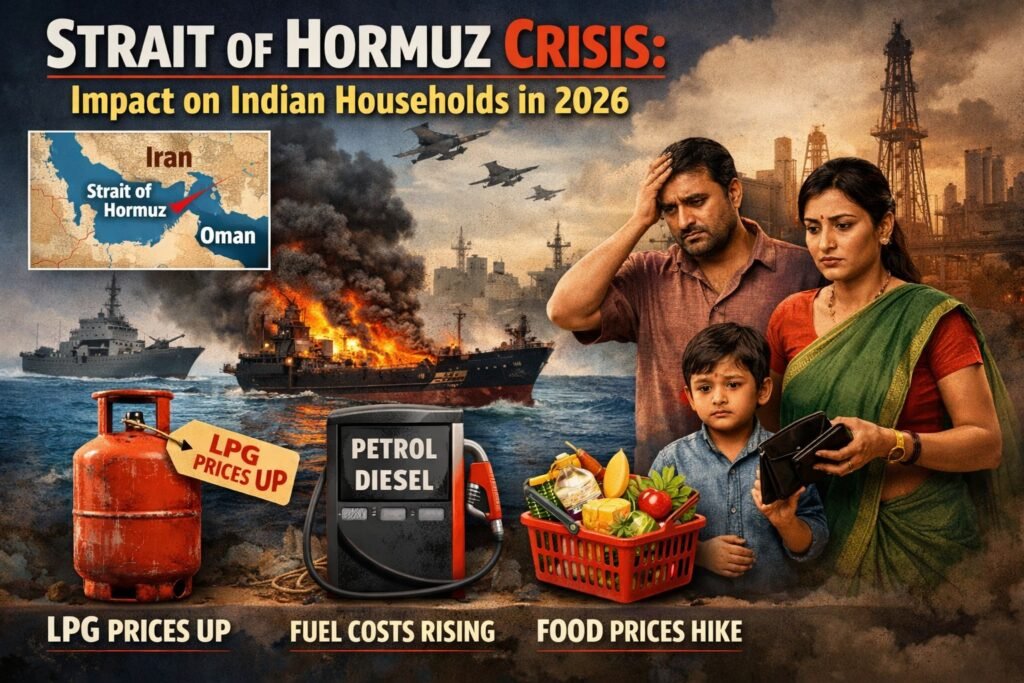
At the heart of India’s vulnerability lies energy. Nearly half of India’s crude oil imports pass through the Strait of Hormuz — the narrow maritime corridor now caught in the crossfire. If this route remains blocked or severely disrupted, oil prices will surge globally. For the Indian middle class, that translates almost immediately into higher petrol and diesel prices, rising cooking gas costs and increased electricity tariffs.
India imports more than 85% of its crude oil needs, and the Gulf region supplies a majority of it. A spike in crude prices rarely remains confined to fuel pumps. Transport costs rise, logistics becomes expensive and inflation spreads through the economy. Groceries, vegetables, airline tickets and even school bus fees can become costlier. In short, a war thousands of kilometres away could quietly squeeze household budgets in Indian cities.
The risks do not stop at energy.
Nearly 10 million Indians live and work across the Gulf states, forming one of the largest overseas communities in the world. Their remittances — which crossed record levels in recent years — are a lifeline for millions of families back home and a critical support for India’s balance of payments.
If conflict spreads across the Gulf, employment uncertainty, economic disruption or evacuation scenarios could reduce these remittance flows. A decline in remittances would ripple across the Indian economy, affecting consumption, housing markets and regional economies that depend heavily on overseas income.
There is also a human dimension to this crisis. Indian families with relatives in Dubai, Doha, Muscat, Riyadh and Kuwait are anxiously watching developments. Any escalation involving Gulf states could trigger safety concerns for Indian workers — from professionals and engineers to nurses, drivers and construction labourers.
Diplomatically, India faces an equally delicate balancing act.
New Delhi has historically tried to maintain working relationships with all sides in the region — Iran, Israel, the United States and the Arab Gulf states. However, geopolitical alignments are becoming more rigid in the current conflict. If the crisis deepens, India could find its strategic autonomy under strain as it navigates competing expectations from its key partners.
There are also strategic stakes tied to India’s investments in Iran, particularly the Chabahar port project, which India sees as a gateway to Central Asia and Afghanistan bypassing Pakistan. A prolonged confrontation involving Iran could complicate these ambitions.
For India’s middle class, the implications of this war may ultimately be felt not through headlines but through everyday economics — rising living costs, uncertainty in global markets and possible economic turbulence.
Wars in the Gulf have historically reshaped oil markets and global geopolitics. For India, a country deeply tied to the region through energy, trade and people, the consequences are immediate and tangible.
The government’s current “wait and watch” approach is understandable. But if the conflict widens, India may soon have to move from watching events to actively managing the economic and diplomatic fallout.
For millions of Indian middle-class households already coping with inflation and economic pressures, the Gulf war could become another unexpected burden — reminding us once again how interconnected the modern world truly is.