
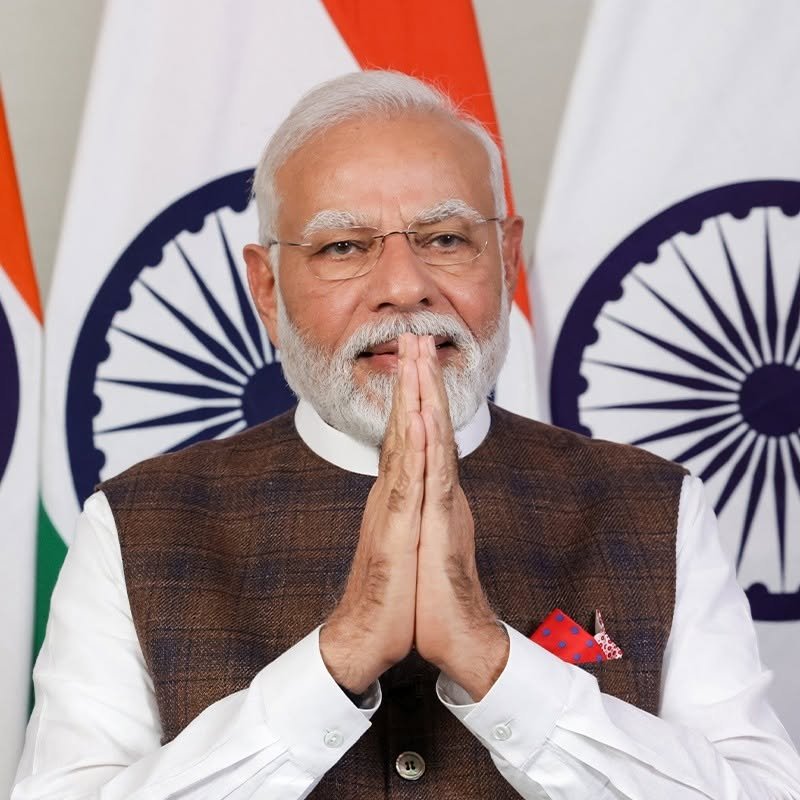
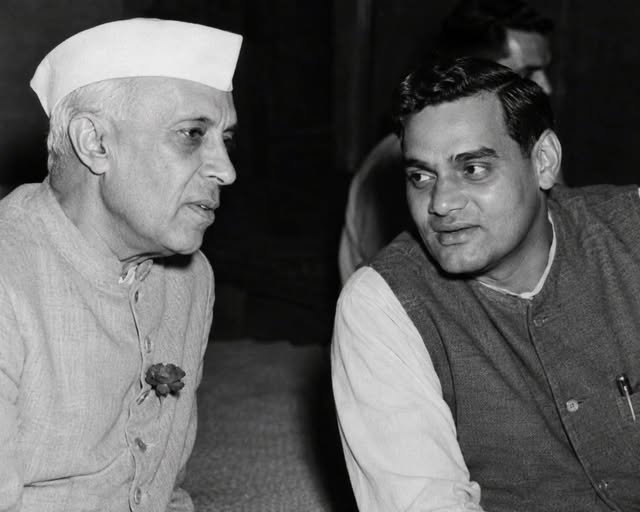
Today on June 10, 2026, Prime Minister Narendra Modi completed 4,399 consecutive days in office, surpassing the uninterrupted elected tenure of independent India’s first Prime Minister, Jawaharlal Nehru. The achievement is undoubtedly historic, but its significance goes beyond a numerical record. It offers an opportunity to reflect on how India itself has evolved over seven decades.
Comparisons between Nehru and Modi are inevitable. Yet they governed two entirely different Indias.
When Nehru took charge of a newly independent nation in the 1947, India was a country of roughly 350 million people. It was recovering from Partition, struggling with poverty, illiteracy, food shortages, and the immense challenge of nation-building. The institutions that define modern India today—the parliamentary system, independent judiciary, scientific establishments, public sector enterprises, premier educational institutions, and democratic traditions—were largely shaped during that era.
Nehru’s greatest contribution was not merely governance; it was creating the foundations upon which future generations could build. Institutions such as the Indian Institutes of Technology, scientific research centres, and public universities helped create the skilled middle class that would later drive India’s economic rise. Many of the Indians leading global corporations, excelling in technology, academia, medicine, and entrepreneurship today are beneficiaries—directly or indirectly—of the educational and institutional ecosystem that emerged during those formative decades.
Modi’s India, however, is a vastly different nation. He governs a population exceeding 1.4 billion people, with nearly 950 million eligible voters, hundreds of political parties, instant communication through social media, and a globally connected economy. The challenges are no longer merely those of scarcity; they are increasingly those of aspiration.
The expectations of citizens have changed dramatically. Today’s voters demand efficient service delivery, better infrastructure, digital governance, employment opportunities, and a stronger international profile. Governments are judged not only by policy announcements but by real-time performance visible on mobile phones and social media platforms.
In this context, Modi’s governance model has focused heavily on technology-enabled welfare delivery, direct benefit transfers, digital payments, infrastructure expansion, and projecting India as a major global player. His administration has sought to combine welfare schemes with administrative efficiency and technological innovation. Whether one agrees with all his policies or not, it is difficult to deny the scale at which governance is now expected to operate.
Perhaps the most remarkable aspect of Modi’s achievement is not simply the duration of his tenure but the fact that he has secured three consecutive mandates from an increasingly demanding electorate. In a democracy as large and politically diverse as India, sustaining public support over such a long period is no small accomplishment.
At the same time, acknowledging Modi’s achievement does not require diminishing Nehru’s legacy. Modern India is not the product of one leader or one era. It is the cumulative result of successive generations of leadership, institutions, reforms, and democratic participation.
Nehru helped build the foundations of the Republic. Modi is attempting to reshape and modernize those foundations for the twenty-first century. One worked in an era of nation-building; the other governs in an age of global competition and digital transformation.
The debate over Jawaharlal Nehru’s legacy remains deeply contested even today. Supporters of the broader Sangh Parivar, including the RSS, argue that while Nehru played a pivotal role in building modern India’s institutions, his vision was heavily influenced by Western liberal and socialist thought and insufficiently rooted in India’s civilizational ethos, cultural traditions, and indigenous knowledge systems.
According to this view, post-independence India succeeded in creating strong democratic and scientific institutions but often overlooked aspects of Indian culture, spirituality, and historical consciousness. Proponents of Prime Minister Narendra Modi’s approach believe his tenure represents an effort to reconnect governance with India’s civilizational identity while simultaneously pursuing modernization, economic growth, and technological advancement.
History rarely presents such milestones as contests between individuals. Rather, they serve as markers of a nation’s journey. Modi surpassing Nehru’s elected tenure is therefore not merely a political record—it is a reminder of how far India has travelled from a newly independent nation of 350 million people to a confident democracy of 1.4 billion citizens.
Critics, however, maintain that Nehru’s emphasis on secularism, constitutionalism, scientific temper, and institutional autonomy was essential in holding together an extraordinarily diverse nation emerging from the trauma of Partition. They argue that these principles continue to underpin India’s democratic success.
The reality is that India’s development has been shaped by both currents. Nehru laid the foundations of modern India through institution-building, public sector development, and investments in higher education. The emergence of India’s highly skilled middle class, including graduates from institutions such as the IITs and IIMs who have excelled both in India and abroad, owes much to that early vision.
At the same time, many economists argue that while the mixed economy model served an important purpose in the early years of nation-building, India needed a faster pace of economic reform by the mid-1960s as population growth accelerated. However, major liberalization did not occur until 1991, when economic reforms unleashed new opportunities, expanded the middle class, and integrated India more closely with the global economy. The benefits of growth were substantial, although economic disparities also widened.
Since assuming office in 2014, Prime Minister Narendra Modi has sought to address these challenges through a different model of governance. His administration has focused on infrastructure expansion, improved road connectivity, digital governance, financial inclusion, and the faster delivery of welfare schemes. The opening of millions of bank accounts, direct benefit transfers, and the use of technology to reduce leakages have transformed the relationship between citizens and the state. Supporters see this as a more outcome-oriented and innovative approach to governance, characterized by out-of-the-box thinking and execution at scale.
As Prime Minister Modi surpasses Nehru’s record for continuous elected tenure, the moment is less about deciding who was the greater leader and more about recognizing India’s remarkable journey. Nehru helped lay the foundations of a newly independent nation, while Modi is steering a much larger, more connected, and more aspirational India. Their approaches may differ, but both have shaped the country in significant ways. Ultimately, India’s success lies not in choosing between Nehru and Modi, but in building on the strengths of every generation to meet the challenges of the future.
About the Author:
Anoop Saxena is a senior journalist with nearly three decades of experience in Indian and international media. Over the course of his career, he has covered politics, governance, business, diplomacy, and public policy, working closely with both domestic and global news organization



10 Responses
Great read, Anoop.
Refreshing to see an article that does not reduce the discussion to Nehru versus Modi. Instead, it highlights the vastly different circumstances in which each governed and the choices they made in response to the needs of their times.
India’s journey has been built on foundations laid by one generation and strengthened by the next. Your balanced and nuanced approach captures that reality well.
Kudos.
Thanks
In India bureaucrats are responsible for the success of the country and running the elected Government. The leaders are politically motivated force and dominate the nation by their own agenda.
Absolutely. The bureaucracy is what ultimately delivers results, but it can only implement the policies and direction set by Parliament and the elected government. Both policy and execution have to work together.
Very well written @Anoop Saxena
Thanks 🙏🏽
In my opinion, India’s journey since independence has also many pitfalls created by leaders that should also be reflected.
As I mentioned, I believe Nehru largely got it right in 1947. The mixed economy and strong institutions he helped create are among the reasons India’s middle class enjoys the opportunities it does today. Having said that, I agree with you that from the mid-1960s until 1991, there was a policy drift and not much was done to accelerate growth. It was only when Narasimha Rao opened the economy in 1991 that India truly began its economic transformation.
Very well written
Thanks