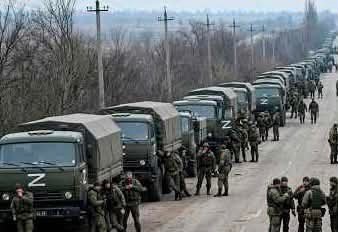
India Cannot Look Away as Its Citizens Continue to Be Drawn Into Russia’s War When the first reports emerged of Indian men being lured into Russia’s war in Ukraine, they were treated as isolated incidents. A few job seekers had allegedly been cheated, a handful of families misled, and some unscrupulous agents had exploited desperate young men searching for work abroad. Two years later, that explanation no longer holds. The problem has not disappeared. It has returned through coffins, court petitions, unanswered phone calls, and families still searching for sons who left India in pursuit of employment but ended up caught in a foreign conflict.
The latest figures presented by the Ministry of External Affairs before the Supreme Court paint a troubling picture. As of May 2026, around 217 Indian nationals are believed to have joined the Russian armed forces. Through sustained diplomatic efforts, India has secured the discharge and return of 139 individuals. However, 49 Indians are reported to have lost their lives in the conflict. The fate of another 23 remains unknown, while six have been officially classified as missing by Russian authorities. These are not isolated cases. They represent one of the most serious overseas citizen protection challenges India has faced in recent years. The identification of missing individuals has become increasingly difficult.
According to the government, DNA samples have been collected from immediate family members of 21 missing persons to assist in tracing them and identifying mortal remains. In eight cases, the Indian Embassy facilitated the return of mortal remains to India, with transportation expenses borne by the Indian Community Welfare Fund. Behind every statistic is a family living with uncertainty, grief and unanswered questions. The issue has also become more complicated than a simple story of trafficking and deception. In an affidavit filed before the Supreme Court last week, the Ministry of External Affairs acknowledged that some Indian nationals had “voluntarily signed contracts to join the Russian Army,” attracted by lucrative salary packages, substantial upfront bonuses and, in some cases, the promise of Russian citizenship. Yet the existence of voluntary enlistment does not diminish the role of exploitation. In fact, it highlights the vulnerability of young men facing unemployment and financial pressures at home.
The line between informed choice and manipulation becomes blurred when recruiters target economically distressed individuals with promises that seem impossible to achieve in India. The government itself has recognised the role of organised recruitment networks. The Central Bureau of Investigation has uncovered major human trafficking rackets that allegedly used social media platforms, including YouTube, to lure young Indians with advertisements for high-paying technical, construction and support jobs in Russia. According to the MEA’s affidavit, many recruits were promised employment as “army security helpers” or support staff. Instead, they reportedly received combat training and were deployed near active battle zones against their wishes. Such accounts challenge the notion that every contract represented genuine and informed consent. A document signed in a foreign language, often in unfamiliar circumstances and after considerable financial investment by the recruit and his family, cannot automatically be treated as evidence of free choice. Many of those who travelled abroad may have understood they were taking risks. Few appear to have anticipated finding themselves on the front lines of Europe’s largest war since the Second World War.
India’s response has evolved over time. New Delhi has repeatedly raised the issue with Moscow, secured the release of many citizens and assisted families seeking information about their relatives. These efforts deserve credit. However, the continuing emergence of cases suggests that existing safeguards remain inadequate. The recent involvement of the Supreme Court has transformed the issue from a purely diplomatic matter into a question of state responsibility. If families must approach courts to learn whether their sons are dead, missing, detained or stranded in foreign military structures, it raises difficult questions about the effectiveness of existing protection mechanisms.
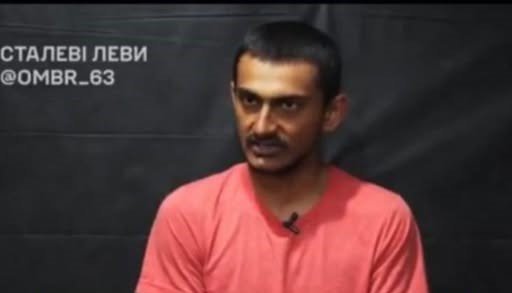
The case of Majoti Sahil Mohamed Hussein from Gujarat illustrates these complexities. Publicly identified as being in Ukrainian custody after fighting alongside Russian forces, his situation demonstrates that some Indians are not only missing in Russia or killed on the battlefield. Some may also be prisoners of war held by Ukraine. While India has reportedly sought consular access and judicial intervention has pushed for urgent action, public information regarding his status remains limited.The issue of Indians being drawn into Russia’s war is no longer just about human trafficking or fraudulent recruitment. It has become a broader challenge involving citizen protection, overseas employment and labour migration policy.
India has demonstrated its ability to protect citizens abroad during crises in the Gulf region through advisories, helplines and emergency response mechanisms. A similar level of attention is needed for Indians caught up in situations arising from the Russia-Ukraine conflict.
The issue is particularly significant because India and Russia signed a temporary labour mobility agreement in 2025. While such arrangements can create legitimate employment opportunities, Russia’s wartime environment demands stronger safeguards, stricter verification of job offers and clear guarantees that Indian citizens will not be recruited into military or military-linked activities.
The broader lesson extends beyond individual cases. Russia today is not simply another destination for overseas employment. It is a nation engaged in a prolonged war, facing military manpower pressures and operating under extraordinary wartime conditions. Any labour mobility arrangement or employment opportunity involving Russia therefore requires a far higher degree of scrutiny than would normally be expected. This reality makes stronger preventive measures essential. India needs mandatory verification of Russia-bound job offers, a publicly accessible blacklist of fraudulent agents, faster prosecution of recruitment rackets, greater coordination between state police forces and central agencies, and dedicated assistance channels for families whose relatives disappear abroad.
Most importantly, India must insist that no Indian citizen be recruited into military or military-linked structures under any visa category. Such assurances should not remain informal diplomatic understandings. They should be formal, verifiable and enforceable. The social media dimension of the problem also demands attention. Recruiters are often reaching vulnerable youth through the same platforms they use daily—YouTube channels, WhatsApp groups and local intermediaries. Government warnings buried on official websites cannot compete with videos promising quick money, foreign jobs and a better future. Awareness campaigns must reach the same villages, towns and digital spaces where these recruitment networks operate. None of this requires India to abandon its strategic relationship with Russia.
Mature partnerships are capable of accommodating difficult conversations. New Delhi can continue its broader engagement with Moscow while firmly asserting that Indian lives are not expendable assets in another country’s military calculations. The question is no longer how Indian youth were first drawn into Russia’s war. The more pressing question is why, after dozens of deaths, dozens more missing, court interventions, diplomatic negotiations and repeated warnings, the system still contains enough loopholes for the cycle to continue. Until that question is answered, every new case will be more than an individual tragedy. It will be evidence of a continuing failure to protect vulnerable Indian citizens from a war that was never theirs to fight.