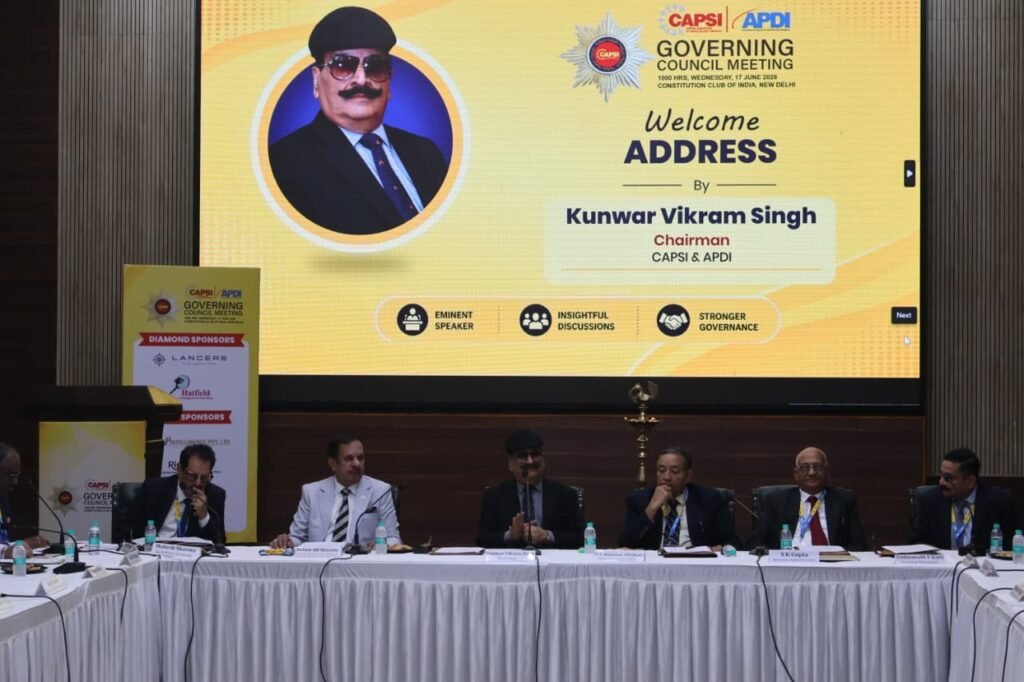

New Delhi: The growing role of private security in India’s internal security framework came into sharp focus at the Governing Council meeting of the Central Association of Private Security Industry (CAPSI) held in New Delhi on June 17, where industry leaders, former security officials and policymakers discussed the sector’s expanding responsibilities in safeguarding critical national assets.
Addressing representatives from across the country, CAPSI Chairman Captain Kunwar Vikram Singh said private security would play an increasingly significant role in the nation’s security architecture in the coming years and called for greater emphasis on professional training, skill development and the adoption of modern technologies.
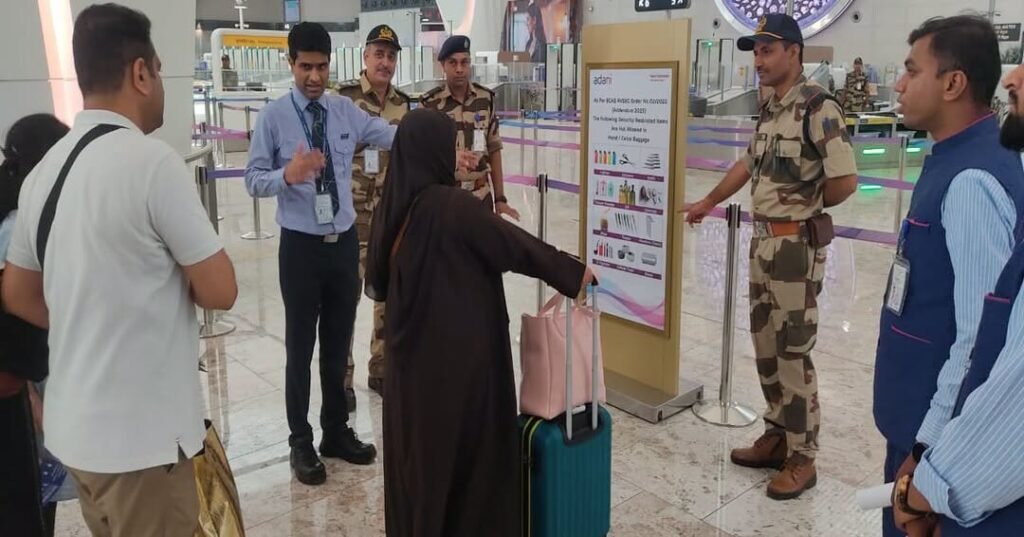
The discussions assume added significance as the Centre is understood to be considering a major restructuring of security responsibilities at airports and other critical infrastructure, including energy installations. According to government sources, the proposal under consideration would allow professionally trained private security personnel to gradually take over certain security functions currently performed by the Central Industrial Security Force (CISF).
Officials believe such a move would enable the CISF to be redeployed for broader internal security duties, helping address manpower shortages and strengthening the country’s overall security preparedness.
Sources said the government has initiated consultations with CAPSI, the apex body representing India’s private security industry, on the proposed framework. A senior Home Ministry official indicated that any transition would be preceded by a comprehensive training programme to ensure that private security personnel meet the required professional standards.
Under the proposed arrangement, CISF instructors would first train a select group of CAPSI master trainers, who would subsequently train private security guards across the country. CAPSI currently operates nearly 170 training centres nationwide and is expected to play a key role in the capacity-building exercise.
India’s private security sector comprises nearly 35,000 registered agencies employing an estimated 10 million security personnel, making it one of the largest private security workforces in the world. Most of these agencies are affiliated with CAPSI.
Captain Singh also informed members that CAPSI has been holding regular consultations with the Ministry of Home Affairs to address licensing and regulatory challenges faced by the industry. He said several issues have seen positive movement and announced that a joint workshop involving officials from the Home Ministry, regulatory authorities and industry representatives will be held in New Delhi on June 25.
Speaking at the meeting, retired Lieutenant General Ashok Shivane and former Border Security Force Director General M.L. Kumawat highlighted the growing contribution of private security to national security objectives. They said the sector would be a key stakeholder in achieving the government’s vision of a “Safe India” by 2047 and urged agencies to maintain high professional standards while embracing technological innovation.
The meeting also witnessed the launch of the “Certified Corporate Investigator” programme by former Gujarat Director General of Police Anil Pratham. Describing corporate investigations as an emerging area of specialization, he encouraged security agencies to develop skilled personnel capable of meeting future industry requirements.
CAPSI Secretary General Mahesh Chandra Sharma said the increasing recognition being accorded to the private security industry reflects more than two decades of sustained efforts by stakeholders. “With the government increasingly acknowledging the importance of private security, the industry’s responsibility towards society and national security has grown substantially,” he said.