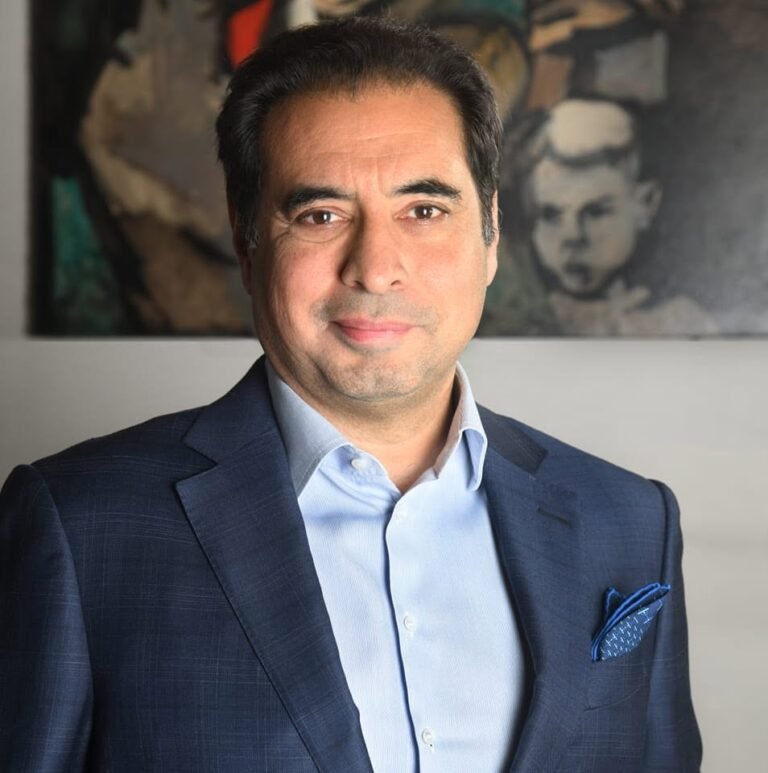
Anoop Saxena
In 2003, two years after the US-led coalition overthrew the Taliban, I made my first trip to Afghanistan. Decades of war have left Kabul with damaged buildings, shoddy roads, and unreliable basic utilities. But in the middle of the devastation, there was something amazing: hope.
Over the following years, I kept coming back for coverage, covering politics, reconstruction, elections, and the lives of ordinary Afghans. One of my most memorable assignments was Afghanistan’s first presidential election under Hamid Karzai. Millions of Afghans queued to vote despite the threat of violence, believing their country was entering a new chapter
Schools and universities reopened, independent media expanded, and women returned to education and employment. A new generation began experiencing freedoms that had been denied under Taliban rule. There were serious problems- corruption, poverty, political instability and a continuing Taliban insurgency-but there was also a sense that Afghanistan was slowly moving forward.
A different Kabul
By the mid-2000s, Kabul had a very different character. Diplomatic areas such as Wazir Akbar Khan and nearby Shahr-e Naw became heavily fortified but surprisingly vibrant enclaves for foreign diplomats, aid workers, journalists, and NGO staff.
With public bars prohibited under Afghan law, restaurants such as Bocaccio, L’Atmosphere, Gandamack Lodge, and Taverna du Liban became popular gathering places for expatriates. Behind blast walls, steel gates, and armed guards, it was possible to experience a brief version of European or American life before stepping back into the very different reality outside.
It was an unusual Afghanistan still insecure and war-torn, but increasingly connected to the international community and full of activity.
That optimism collapsed dramatically in August 2021 when the Taliban returned to power following the withdrawal of international forces.
Five years of Taliban rule
Five years later, Afghanistan presents a deeply contradictory picture.
The first thing a visitor notices is security. The constant fear of suicide attacks, roadside bombs and armed clashes that once haunted Kabul has largely disappeared. Walking through Kabul late at night as a foreigner can feel surprisingly safe.
The capital is heavily monitored, with numerous checkpoints. Vehicles are routinely stopped and searched, and strict controls have been imposed on weapons. Outside Kabul, the security presence is much lighter. In places such as Bamiyan, Balkh and Herat, there are relatively few checkpoints. Mazar-e-Sharif still has some, but the heavy security atmosphere that once accompanied travel across Afghanistan has largely disappeared.
For ordinary Afghans, this matters. The decades of open warfare are over, and everyday security has improved considerably.
But security tells only half the story.
The disappearance of women
The most disturbing transformation is the disappearance of women from public life.
During my earlier visits, women could be seen in universities, government offices, television studios, markets and restaurants. Today, their presence in public spaces has been dramatically reduced.
Over the past five years, the Taliban have imposed sweeping restrictions on women’s education, employment, movement and participation in society. Girls have been excluded from secondary education and universities, while women have been pushed out of large sections of the workforce.
Women are also restricted from many public spaces, including parks, gyms, amusement parks and other recreational facilities. When they leave their homes, they face strict dress requirements and, in many circumstances, are expected to be accompanied by a male relative, or mahram.
Even something as ordinary as taking a taxi can become a problem if a woman is travelling alone.
The result is not simply a loss of individual freedom. It is the gradual removal of half the population from the economic and social life of the country.
Band-e-Amir: a symbol of exclusion
I was reminded of this during a recent visit to Band-e-Amir National Park in Bamiyan, famous for its spectacular blue lakes.
Afghan women are prohibited from visiting the park. Our group included foreign women tourists, and we had to time our visit carefully, arriving very early in the morning to avoid complications.
Standing beside those extraordinary blue lakes, I could not help thinking about Afghan women who are not allowed to experience the same landscape.
It was a quiet but powerful reminder of how restrictions can reshape a society not only by preventing people from doing certain things, but by gradually making them invisible in public life.
A country facing hunger
Behind the restrictions on women lies another enormous problem: Afghanistan’s worsening humanitarian crisis.
The World Food Programme estimates that around 19 million Afghans face acute hunger or worse. Funding shortages have become so severe that WFP says it is being forced to turn away six out of seven women and children suffering from life-threatening acute malnutrition.
Around 14 million acutely hungry people have reportedly lost access to WFP food assistance.
For women, the humanitarian and economic crises overlap. Prevented from working, restricted in their movement and excluded from much of public life, many women have few ways to support their families.
Some women have described desperate situations in which they may have to marry off—or even sell—their daughters simply to feed the rest of their families.
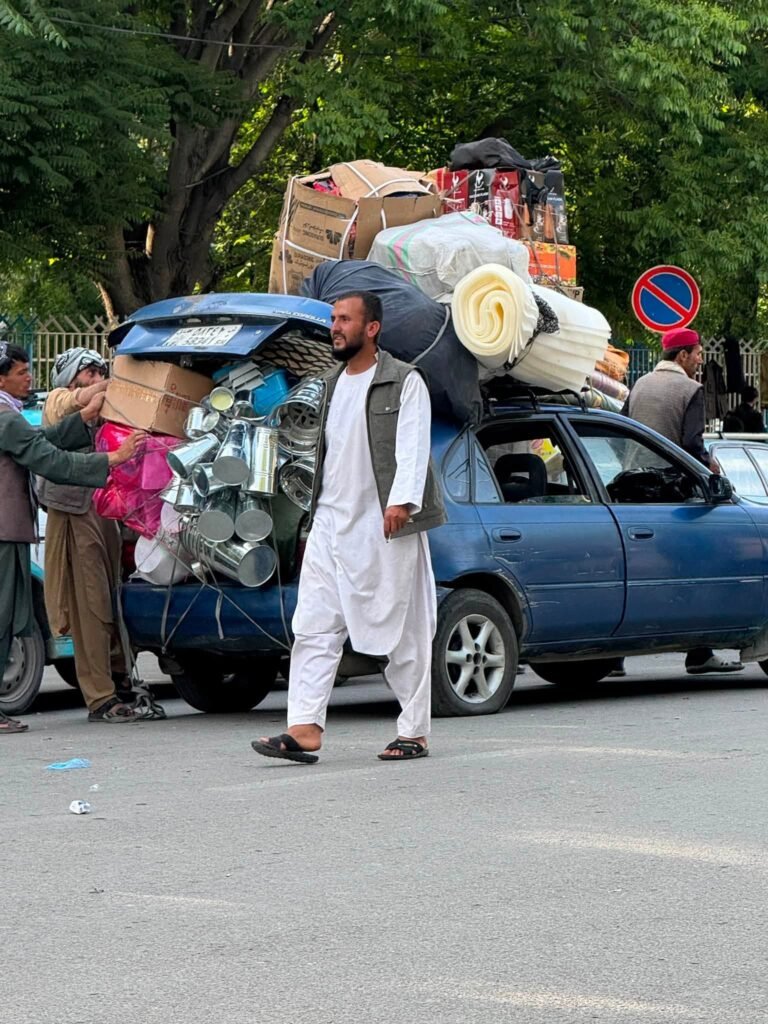
The crisis is being intensified by the return of millions of Afghans from Iran and Pakistan, placing additional pressure on already depleted resources.
WFP says it needs around $500 million for the coming six months, but has received only about 8 percent of that amount.
These are staggering figures, but behind every statistic is a family struggling to find food, shelter and a future.
Five years later
As the Taliban approach their five-year anniversary in power on August 15, there are effectively two Afghanistans.
One is safer than it was during the years of war. Bombings and armed conflict have declined dramatically, roads are more secure and people can travel with fewer fears of violence.
The other Afghanistan is experiencing a profound humanitarian and human-rights crisis. Women have been pushed out of education, employment and public life. Millions face hunger. Humanitarian agencies are struggling for funds, while the economy remains deeply fragile.
Looking back to my first visit in 2003, the contrast is striking.
I remember Afghans standing in long queues to vote, believing they were helping build a new country. I remember women entering universities and workplaces. I remember Kabul’s international community gathering behind blast walls in restaurants and hotels, creating a strange but vibrant connection between Afghanistan and the outside world.
Much of that world has disappeared.
The Taliban can point to improved security, and that achievement should not be dismissed. But peace cannot be measured only by the absence of gunfire. A country can be physically safer while its people are less free, its women more isolated and its families increasingly hungry.
Five years after the Taliban’s return, that is Afghanistan’s central contradiction: the guns have largely fallen silent, but for millions of Afghans especially women and children the struggle for a dignified life has become even harder.
Anoop Saxena is a senior journalist and media professional with more than 25 years of experience covering South Asia. He works for International Media, reporting extensively on India, Afghanistan, Pakistan and other countries in the region. He has travelled to Afghanistan regularly since 2003, covering politics, elections, reconstruction, conflict and the lives of ordinary Afghans.