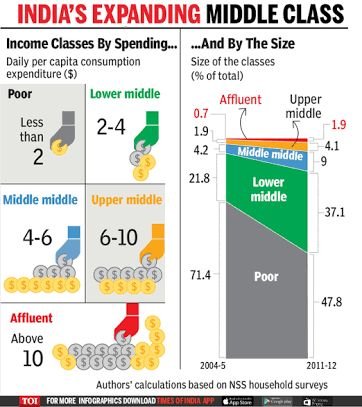

New Delhi: India’s manufacturing sector recorded its strongest growth in three months during May, driven by robust domestic demand, higher production levels and continued government spending on infrastructure. The improvement has raised hopes of better employment opportunities and stronger income growth for India’s vast middle class at a time when concerns about household finances remain significant.
The expansion in manufacturing comes as companies reported increased orders and improved business activity across several sectors. Economists believe that sustained industrial growth could support job creation, particularly in areas such as automobiles, engineering goods, construction materials, electronics and consumer products.
A stronger manufacturing sector is widely seen as essential for generating large-scale employment opportunities for young Indians entering the workforce. Increased industrial activity can also have a multiplier effect, benefiting transportation, logistics, retail and service sectors that depend on manufacturing growth.
However, the positive outlook is being tempered by growing geopolitical uncertainties, particularly the ongoing tensions involving Iran and the wider Middle East region. Any escalation in the conflict could have direct consequences for India through higher crude oil prices, increased transportation costs and supply chain disruptions.
For India’s middle class, the biggest concern remains inflation. Rising global oil prices often translate into higher fuel costs, more expensive transportation, increased logistics expenses and eventually higher prices for everyday goods and services. Household budgets, already stretched by education, healthcare and housing expenses, could face additional pressure if geopolitical tensions persist.
Economic analysts point out that while manufacturing growth creates jobs and improves incomes, inflation can quickly erode those gains. Salaried households, in particular, often find it difficult to keep pace with sudden increases in living costs.
India’s dependence on imported energy makes developments in the Gulf region especially important. Any disruption to oil supplies or sharp increase in crude prices could impact everything from food prices to airline tickets and household utility costs.
Despite these risks, economists remain cautiously optimistic. India’s relatively strong domestic demand, ongoing infrastructure projects and improving manufacturing performance provide a degree of resilience against external shocks. Government capital expenditure on roads, railways, logistics and industrial corridors continues to support economic activity and employment generation.
The challenge for policymakers will be to ensure that manufacturing-led growth translates into sustainable job creation while keeping inflation under control. For the middle class, the coming months may therefore present a mixed picture: improving employment prospects on one hand, but uncertainty over living costs due to global geopolitical developments on the other.
As India’s factories increase production and businesses expand hiring, much will depend on whether global tensions remain contained. If manufacturing momentum continues and energy prices remain stable, the sector could emerge as a key driver of both economic growth and middle-class prosperity in the months ahead.