
Narendra Bhalla, Special Correspondent
New Delhi, June 25: Emphasising the critical role of the private security sector in India’s internal security framework, the Ministry of Home Affairs (MHA) has directed all states to ensure that complaints and applications related to private security agency licences are resolved within three months.
Addressing a joint workshop in New Delhi on Thursday, MHA Joint Secretary (Police Modernisation) R. Prasanna instructed state officials to accord priority to the issuance and renewal of licences under the Private Security Agencies Regulation Act (PSARA). He stressed that fresh licences should be granted within the prescribed timelines and that pending renewal applications should be cleared without delay.
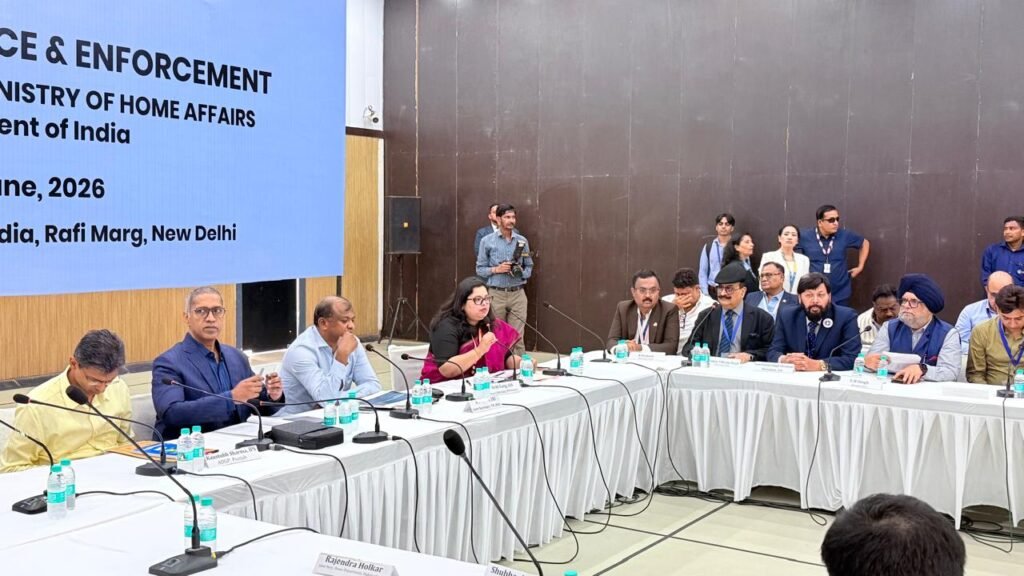
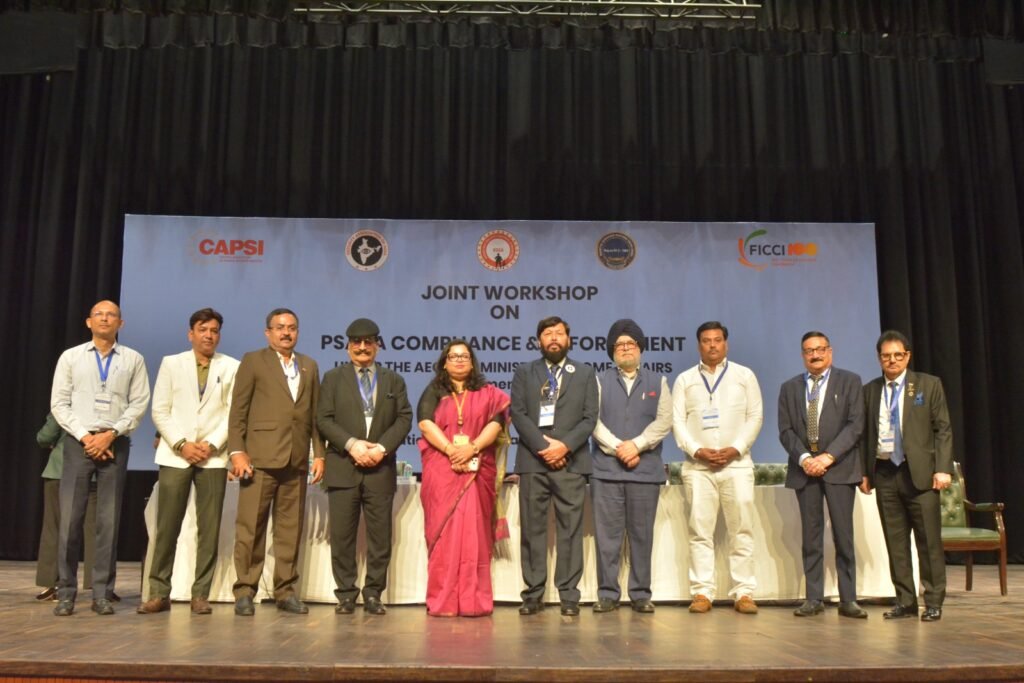
The workshop, organised under the leadership of the Home Ministry in collaboration with the Central Association of Private Security Industry (CAPSI), FICCI and other industry bodies, aimed at addressing long-pending issues faced by the private security sector. The initiative follows a series of discussions held over the past several months between CAPSI Chairman Kunwar Vikram Singh, General Secretary Mahesh Chandra Sharma and senior Home Ministry officials.
Officials from state controlling authorities responsible for regulating private security agencies were invited to interact directly with industry representatives and address their concerns. Prasanna sought responses from senior officials, including the Directors General of Police of Gujarat and Punjab, and emphasised that issues concerning the private security industry should not be taken lightly.
He urged state-level nodal officers to maintain regular consultations with private security associations to ensure timely resolution of grievances and smoother implementation of regulations. More than 400 representatives from the private security industry across the country attended the conference.
Highlighting the growth of the sector over the past two decades since the enactment of PSARA in 2005, CAPSI Chairman Kunwar Vikram Singh said that India now has around 35,000 registered private security agencies employing nearly 10 million security guards. He described the sector as a vital component of the country’s internal security architecture.
Singh also advocated amendments to the existing regulatory framework, including the introduction of a “One Nation, One Licence” system to eliminate the need for separate licences in every state. According to industry representatives, Maharashtra and Delhi currently have the highest number of pending licence applications.
MHA Deputy Secretary Kriti Garg presented a detailed review of complaints and suggestions received from the sector and outlined the ministry’s response. She said the ministry has initiated state-wise monitoring of pending cases to ensure faster disposal.
Industry representatives also recommended abolishing the requirement for repeated police verification during licence renewals and removing the need to obtain fresh licences when office premises are shifted. Responding positively to several of these suggestions, Prasanna assured participants that an appropriate framework would be developed soon.
Underlining the growing importance of private security in national security planning, Prasanna revealed that Union Home Secretary will hold a meeting with Chief Secretaries and Directors General of Police of all states on July 2 to discuss the issue further.
Significantly, the government is examining proposals to optimise the deployment of the Central Industrial Security Force (CISF) for core internal security duties. As part of this strategy, trained private security personnel could gradually assume responsibility for security functions at airports, public institutions and certain religious sites, with a detailed roadmap currently under preparation.