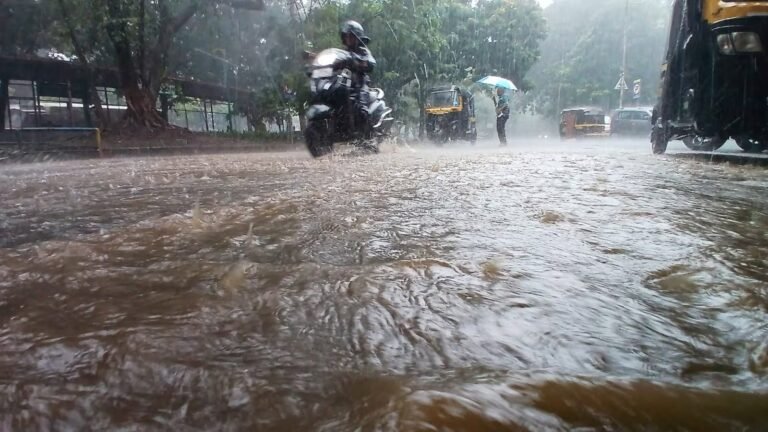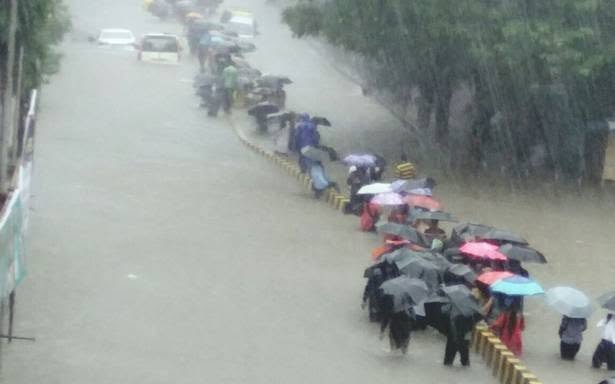

Mumbai: India’s financial capital is once again battling the fury of the monsoon, but this year’s rains have highlighted a deeper urban crisis. Record rainfall and powerful winds have left a trail of destruction, exposing the city’s fragile infrastructure and raising questions about urban planning.
Mumbai received nearly a month’s worth of rainfall in just the first week of July, accompanied by wind speeds exceeding 75 km/h. The impact has been devastating. Hundreds of trees have been uprooted, roads flooded and transport disrupted.
According to civic data, 830 trees and 1,238 branches had fallen by July 7, nearly matching the total number of tree falls recorded in the whole of the previous year. The falling trees claimed several lives, including an 11-year-old child travelling in a school bus, an 18-year-old motorcyclist and a 63-year-old shopkeeper.
Residents accuse civic authorities of weakening trees by encasing their roots in concrete, preventing proper growth and reducing stability during storms. Officials maintain that the unprecedented weather would have challenged any major city.
The debate goes beyond the monsoon. Urban experts argue that poorly maintained infrastructure, unchecked construction and inadequate disaster preparedness are making Indian cities increasingly vulnerable to extreme weather events linked to climate change.
As Mumbai braces for more heavy rain this season, the city’s biggest challenge may not be the monsoon itself, but whether it can adapt its infrastructure to withstand a future of more frequent and intense weather events.